Agentic AI Workflow Development vs Traditional Software
By Editorial Team · Updated 2026-07-25
Traditional software runs on rigid if-then rules, executing fixed logic without deviation. Agentic AI, by contrast, reasons, decides, and adapts across multi-step workflows with minimal human steering. Gartner projects that agentic capabilities will likely increase significantly in enterprise applications by 2028 — a structural shift, not a feature upgrade.
What Actually Separates Agentic AI From Traditional Code?
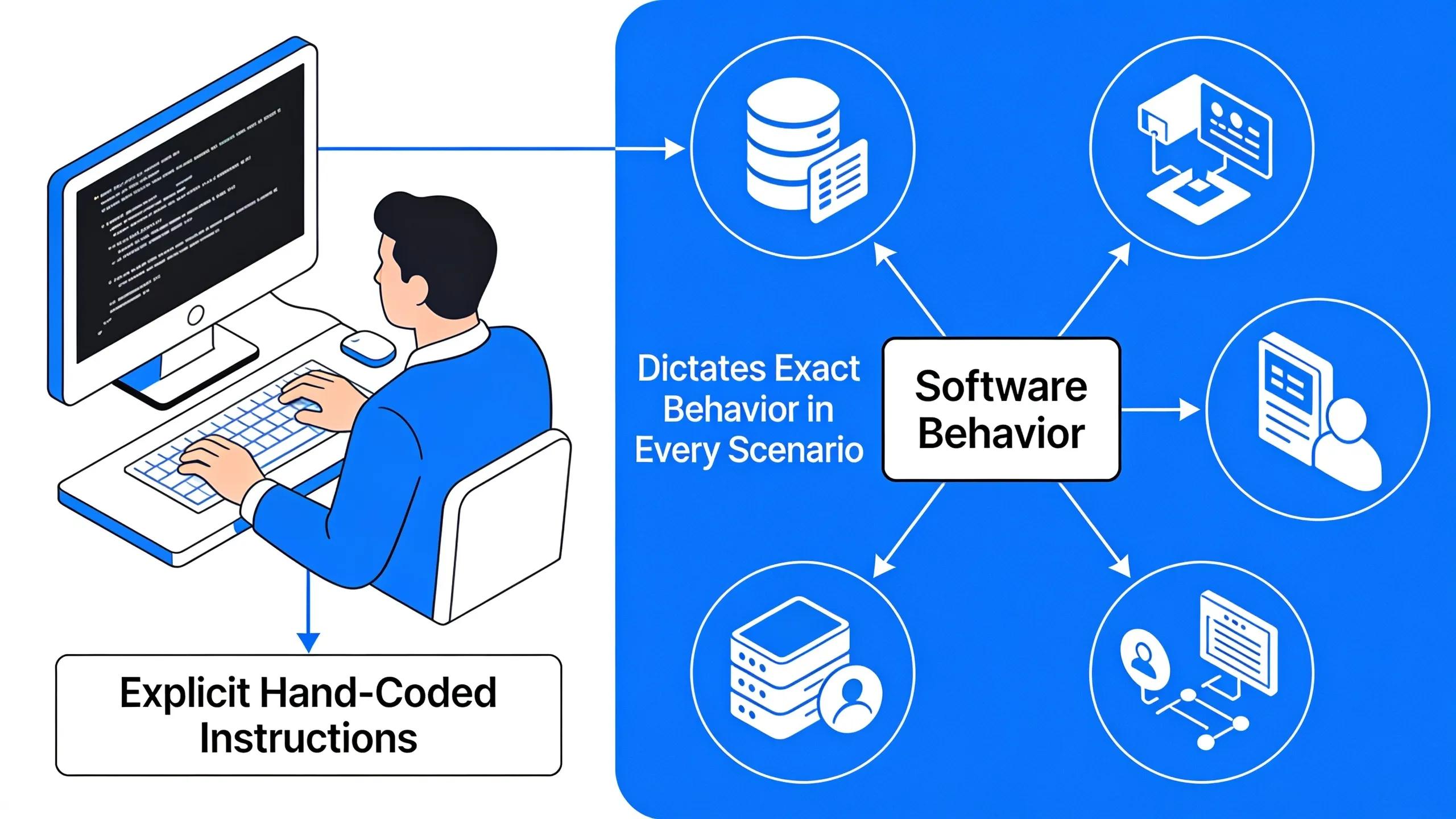
Code obeys. Agents decide. Traditional software runs on explicit, hand-coded instructions, each scenario mapped in advance by a developer who anticipated every fork in the road. Agentic systems break that contract entirely, choosing their own path toward a goal rather than following a script.
Traditional AI still leans on human input and predefined rules to function. Agentic AI, by contrast, operates independently and makes its own decisions without a human hovering over every step. That distinction is the engine behind modern Agentic AI Workflow Development. Systems adapt mid-task instead of halting at the edge of their programming.
Traditional Software/AI | Agentic AI |
|---|---|
Explicit, pre-written instructions | Independent, goal-driven decisions |
Requires human rules for every case | Requires human input only for design |
Predictable, static execution | Adaptive, dynamic execution |
Is agentic AI just a faster version of automation?
No. Automation follows fixed rules; agentic AI evaluates situations and chooses a course of action on the fly. Speed isn't the differentiator here — autonomy is.
Gartner projects that agentic capabilities will likely increase significantly in enterprise applications by 2028. For engineering leaders, that curve isn't a forecast to shrug off. It's a five-year runway to rebuild how systems get built.

How Does Decision-Making Diverge Between These Two Models?
Traditional AI locks decisions inside rigid, rule-based boxes. Agentic systems weigh multiple variables at once, then sharpen their own strategies as fresh data arrives. One camp follows a script; the other rewrites the script mid-performance.
The gap widens once conditions shift. Traditional AI stalls when the environment changes because its logic was never built to bend. Agentic architectures do the opposite. They continuously absorb new information and recalibrate on the fly, treating volatility as raw material rather than a threat.
Why does traditional AI struggle with change while agentic systems don't?
Traditional AI development stays narrow by design, optimized for one specific task performed the same way every time. That precision becomes a liability the moment real-world conditions drift away from the training assumptions baked into the model.
Engineering leaders evaluating Agentic AI Workflow Development see this divergence play out in production pipelines every day. Jonathan Duque architects multi-agent pipelines and MCP integrations engineered to run against live operational work, building systems designed to improve themselves rather than freeze at deployment. cite-3
Decision Trait | Traditional AI | Agentic AI |
|---|---|---|
Rule structure | Fixed, predefined | Self-refining |
Response to change | Struggles, stalls | Adapts continuously |
Task scope | Narrow, single-purpose | Broad, multi-variable |
The contrast isn't cosmetic. It's the difference between software that waits for instructions and software that reasons its way forward.
When Should Leaders Commit To Agentic AI Workflow Development?
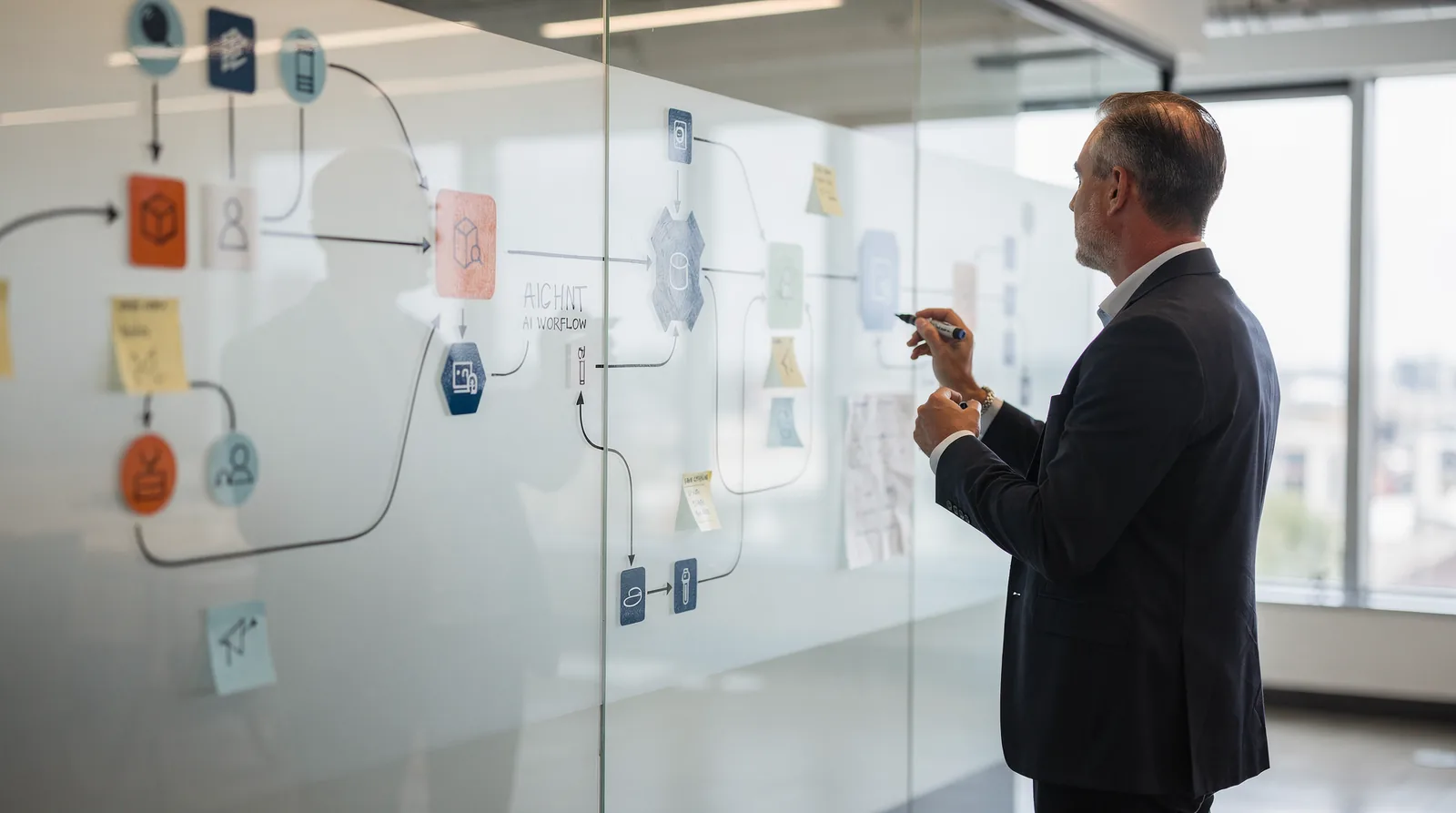
Timing matters more than appetite for novelty. Engineering leaders should commit to Agentic AI Workflow Development the moment static, rule-bound pipelines start choking on complexity that predictive models were never built to handle. The industry itself is sprinting away from static, predictive systems toward dynamic, autonomous ones that act on business objectives rather than just forecasting them. Waiting until competitors prove the model out costs leverage; moving before the system is stress-tested costs credibility.
Duque's method offers a clean litmus test. His approach rests on building stress-tested AI systems that demonstrate autonomous, low-oversight performance before any team touches them. The guiding principle: build the system first, then teach it. Credibility gets earned through results, not slide decks.
How Do Teams Know They're Ready For Agentic Workflows?
Readiness shows up as friction, not enthusiasm. If existing workflows demand constant human correction for tasks that should self-manage, the organization has outgrown traditional software logic.
What Should Happen Before Rolling Out Agentic AI Company-Wide?
A working, proven system should exist first. Effective enablement then translates that bleeding-edge capability into a workflow teams can run daily, without a manual in one hand and doubt in the other.
Commitment checklist:
A stress-tested system already runs with minimal oversight
Leadership can show proof, not promises
Teams receive translated, day-to-day workflows — not raw technical demos
The chasm between agentic AI and traditional software development isn't merely technical—it's philosophical. Where conventional systems execute predetermined paths with mechanical precision, agentic systems breathe with autonomy, learning and adapting as they navigate complexity. This fundamental shift demands we abandon the architect's blueprint mentality and embrace something wilder: systems that think, decide, and evolve. The future belongs not to those who build rigid machines. To those brave enough to cultivate intelligent partners that grow alongside our ambitions.