Implementing AI Architecture for Organizations

By Editorial Team · Updated 2026-07-25
Priorities determine success: evaluate accuracy, explainability, control, data needs, time to value, and creativity before adopting any AI system, using a clear framework rather than brand recognition alone. Notably, a significant number of organizations struggle to reach true AI maturity, underscoring the need for careful, structured selection.
Selecting the right AI system demands a framework, not brand instinct. Since a significant number of organizations still struggle to reach true AI maturity. Leaders must weigh six priorities: accuracy, explainability, control, data needs, time to value, and creativity, matching each use case to the tool that actually fits it, not the flashiest name.
What Must You Gather Before Choosing an AI System?
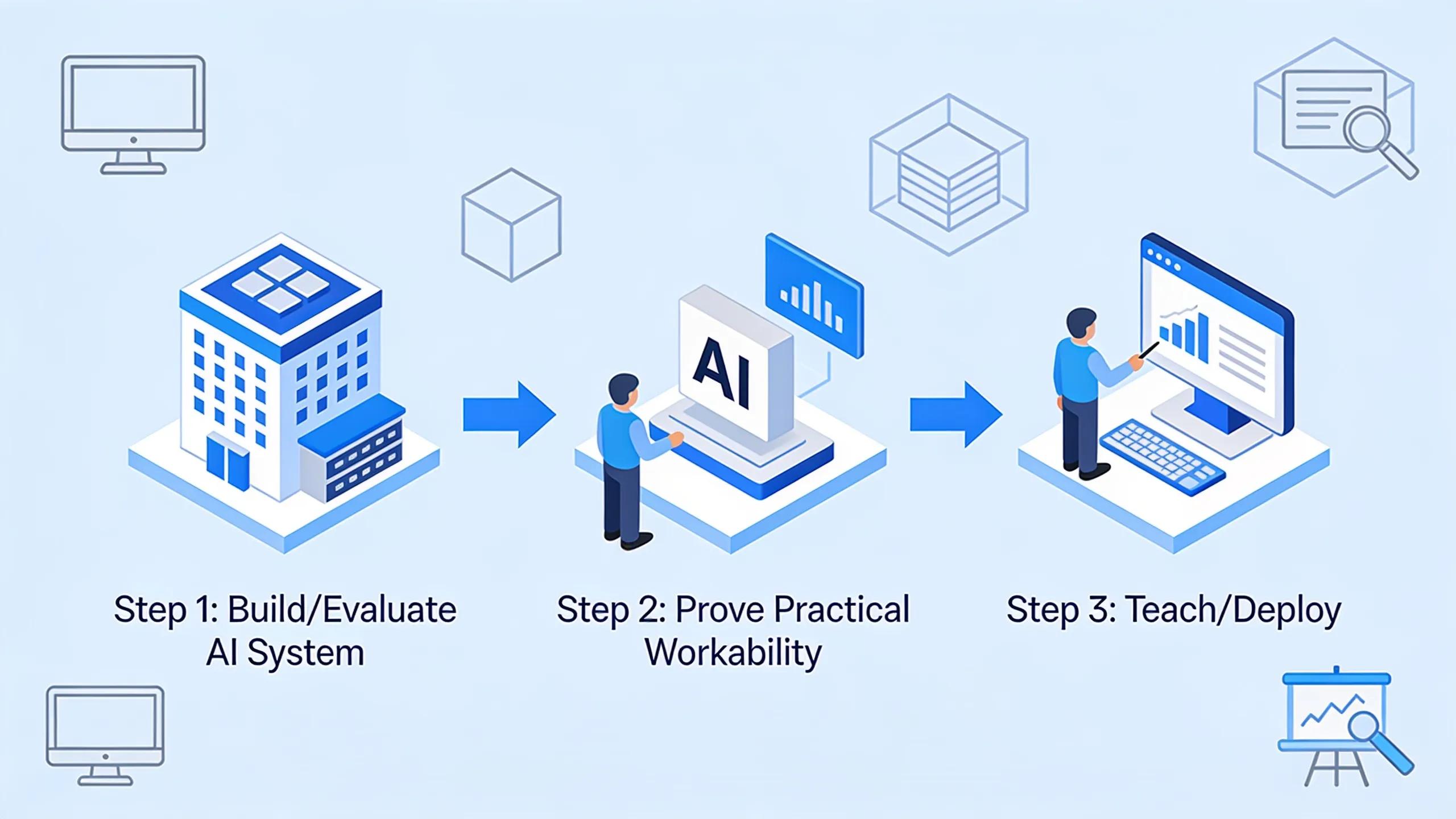
Gathering the right materials before selection separates organizations that adopt AI successfully from those stuck in endless pilots. Implementing AI architecture for organizations demands proof before promises. A working system tested in the wild, not a slideshow of possibilities. A significant number of organizations struggle to reach full AI maturity, a stark gap between spending and results.
That gap often traces back to one missing habit: building before teaching. Systems proven to work earn trust; systems explained in theory rarely do.
Before evaluating vendors, department heads should collect:
Document the repetitive task the team wants automated, in plain language.
List the tools currently in use and where data lives.
Identify who owns the decision — IT, operations, or a hybrid team.
Set a fit checklist covering compatibility, security, and scalability.
Why does choosing without a framework backfire?
Buying based on brand recognition or peer pressure. Without checking fit, compatibility, or scale — invites rework and wasted budget. A single flashy use case rarely reveals whether a tool survives contact with real operations. The fix isn't more research; it's a disciplined checklist applied before contracts get signed.

How Do You Evaluate and Select the Right AI Platform?
Six priorities decide whether a platform earns its place inside an organization: accuracy, explainability, control, data needs, time to value, and creativity. Skip this scoring exercise, and departments end up with shiny software nobody trusts by month three. Weighing each factor against the actual use case — not the vendor's demo reel. Separates a lasting system from an expensive experiment.
Implementing AI architecture for organizations succeeds when the design mimics a living pipeline, not a static tool. Multiple agents should hand off tasks to one another, working against real tickets, real invoices, real customer messages — not sandbox data dressed up for a pitch meeting. Systems built this way tend to self-correct over time instead of decaying the moment conditions shift.
What makes an AI platform actually worth adopting?
A platform earns its keep when it helps decision-makers act on data rather than just visualize it. Look for tools that flag inefficiency automatically and point toward better resource allocation. That's the measurable payoff leadership actually cares about.
How do you know a system is ready to scale beyond pilot?
Readiness shows up as independence. A strong AI approach proves it can operate efficiently without someone hovering over every output before anyone attempts a company-wide rollout. Evaluation checklist:
Does it hold accuracy across edge cases, not just clean sample data?
Can a non-technical manager explain why it made a decision?
Does it reduce hands-on correction after 30 days of use?
Translating raw capability into workflows a department will actually touch daily. That's the real test, and it's harder than picking the flashiest demo.

What Mistakes Derail AI Adoption After You Pick a Tool?
Vendor selection ends the shopping phase, not the risk phase. Most collapses happen after the contract signs, when nobody builds the bridge between the software and the humans expected to use it. Implementing AI architecture for organizations demands curriculum and enablement systems that carry teams from doubt into daily habit. Skipping that step leaves expensive tools gathering dust.
Three failure patterns show up again and again:
Single-use-case tunnel vision — leaders greenlight a platform based on one flashy demo, ignoring compatibility, security, and scalability.
No proof before promotion — teams roll out systems that haven't been tested against real workflows.
Training as an afterthought — enablement gets bolted on after launch instead of designed alongside it.
Why Does AI Adoption Fail Even With the Right Tool?
Adoption fails when a tool works in theory but never earns trust in practice. The strongest path builds a system that already proves itself before anyone teaches it to a wider team.
The journey toward selecting your organization's AI system mirrors the act of choosing the right brush for a canvas—it demands intention, self-awareness, and clarity about the masterpiece you're building. Your decision crystallizes when you align technological capability with genuine organizational need, when you've honestly assessed your team's readiness, and when you've traced the threads connecting your current challenges to future possibilities. The right system doesn't simply solve today's problems. It becomes the foundation upon which your organization's intelligence grows, evolves, and ultimately transforms how work gets done.